Knowledge Journal
One article a day keeps the impostor syndrome away. Notes on Computer Science, Finance, Economics, and Mathematics.
Explore Categories

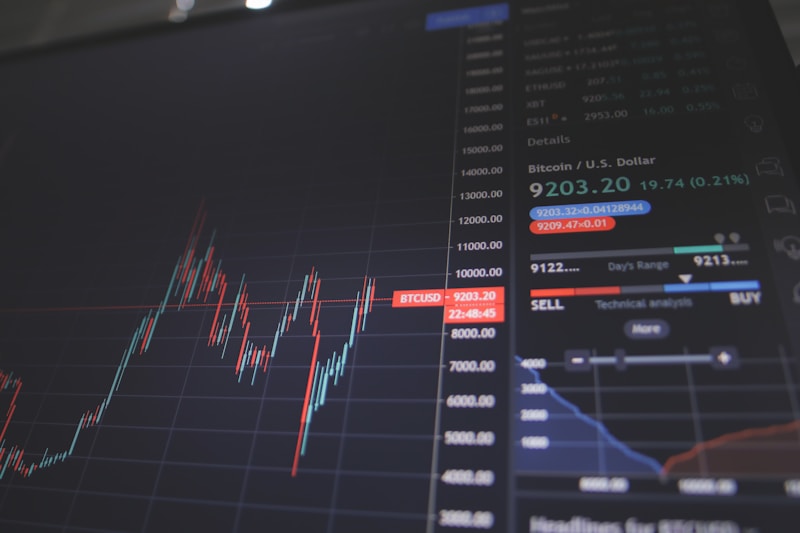



Algorithmic Trading 101 - From Strategy to Execution
Over 70% of US equity volume is algorithmic. Learn how algorithms actually trade: strategy design, backtesting, execution algorithms like VWAP and TWAP, market making, HFT, and the pitfalls that kill real strategies.

Linear Algebra for Quants - Vectors, Matrices, and Why They Matter
Portfolios, covariance matrices, factor models, and PCA all speak the same language: linear algebra. Learn the math that underpins every serious quant strategy, with real finance examples and Python code.
Dependency Injection in C# - Stop Writing Hard-Coded Code
The pattern that makes every modern C# codebase testable, flexible, and maintainable. Learn constructor injection, service lifetimes, and the .NET DI container with real, runnable examples.

FX Markets Explained - The World's Biggest Market
Over $7 trillion trades every single day. That is more than stocks, bonds, and commodities combined. Learn how FX actually works: pairs, pips, spot vs forward, carry trade, and the central banks that move it all.

NumPy Crash Course - The Math Engine Behind Everything
Pandas, scikit-learn, TensorFlow, and every serious Python library for finance sits on top of NumPy. Learn the array mechanics, vectorization, and broadcasting tricks that make it 100x faster than Python loops.
Credit Default Swaps - The Derivative That Ate Wall Street
From obscure insurance product to trillion-dollar market to the detonator of the 2008 crisis. Learn how CDS work, how they are priced, and why they almost destroyed the global financial system.

Value at Risk - How Banks Measure Their Worst Days
How much could you lose tomorrow? VaR tries to answer that question with a single number. Learn historical, parametric, and Monte Carlo VaR with real Python code, plus why the number lies when it matters most.

Inflation Explained - Why Your Money Buys Less Every Year
Why a coffee that cost $2 in 2010 costs $5 today, what CPI actually measures, how central banks fight inflation, and the historical disasters of runaway prices. The complete guide to the silent thief.

Black-Scholes Decoded - The Most Famous Formula in Finance
The formula that won a Nobel Prize, launched an industry, and still prices trillions in options every day. Learn how Black-Scholes works, why it matters, and when it lies to you.

Pandas for Finance - The Swiss Army Knife of Data Manipulation
Every Python finance workflow eventually passes through pandas. Learn DataFrames, time series, merging, pivoting, and returns calculation with real market data examples you can run today.

SQL for Finance - Querying Your Way Through Millions of Trades
Every trade, every position, every risk number lives in a database. Learn the SQL that finance actually uses: from basic queries to window functions, CTEs, and real-world trade analysis, all with concrete examples you can run today.
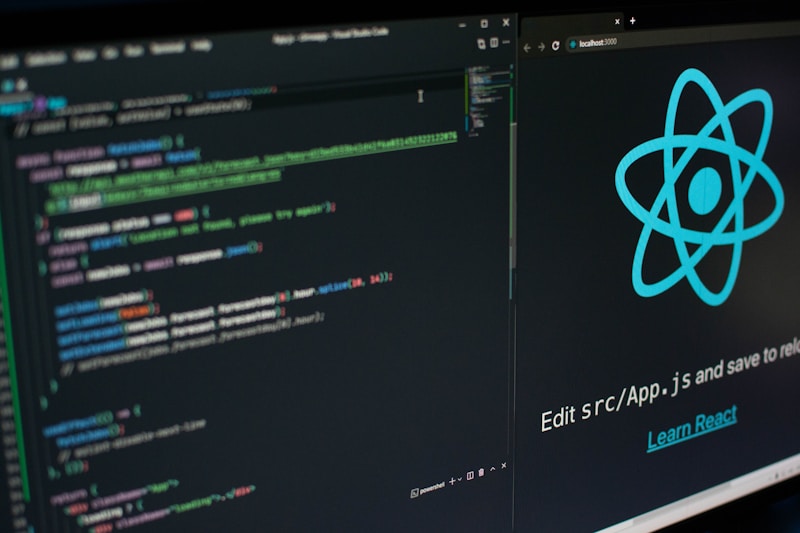
Web Scraping 101 - Extracting Financial Data with Python
Stop copying numbers from websites like it is 2003. Learn how to pull financial data from the web using Python, requests, BeautifulSoup, and pandas, with real examples from Yahoo Finance, ECB rates, and more.

Excel VBA for Traders - Automating Spreadsheets That Actually Work
VBA is not dead, it is running every trading floor on Earth. Learn how to automate Excel like a pro: from bond pricers to P&L dashboards, with real code that solves real problems.

Monte Carlo Simulation - Pricing Options the Hacker Way
Why solve equations when you can throw millions of random numbers at the problem? Learn how Monte Carlo simulation prices options, with full Python code, real examples, and the math that makes it all work.

The Three Pillars of Risk - Market, Credit & Operational Risk Explained
Every financial disaster comes down to one of three risks: market, credit, or operational. Learn what each one means, how banks measure them, and why ignoring any of them can blow up your balance sheet.

Interest Rate Swaps - How to Price the Most Traded Derivative on Earth
Interest rate swaps move more money daily than the GDP of most countries. Learn how they work, how they're priced, and why every bank on the planet trades them.

Garbage Collection in C# - How .NET Cleans Up Your Mess
From Gen 0 to the Large Object Heap, discover how .NET's garbage collector works under the hood. Spoiler: your objects don't just disappear, they get promoted, compacted, and occasionally interrogated.

Async vs Parallel vs Concurrent - C# Concurrency Untangled
Async, parallel, concurrent, multithreaded - everyone uses these words interchangeably, and everyone is wrong. A concrete guide to what each actually means in C#, with code that proves it.

The Yield Curve - Wall Street's Crystal Ball
The one chart that makes Wall Street lose sleep. From normal to inverted, understand why the yield curve predicts recessions better than most economists.

The Trading Floor Cheat Sheet - Every Asset Class Explained
Rates, Forex, Repos, Derivatives... the complete map of what gets traded on Wall Street. From someone who actually sat on a trading floor.

The Greeks - Delta, Gamma, Theta & Friends Demystified
Delta, Gamma, Theta, Vega, Rho - they sound like a college fraternity, but they're actually the most important risk measures in options trading. Let's decode them all with real numbers.

Sorting Algorithms Face-Off - From Bubble Sort to Quick Sort
Seven sorting algorithms walk into a bar... and we benchmark all of them. Step-by-step visualizations, code, and a clear winner for every situation.
Statistics From Scratch - The Complete No-BS Guide
Mean, median, standard deviation, hypothesis testing... everything you need to master statistics, explained like you're a smart human (not a textbook).

S.O.L.I.D. - The 5 Commandments of Clean C# Code
Five principles that separate clean, maintainable C# code from spaghetti nightmares. With concrete examples of what NOT to do (and how to fix it).

The Singleton Pattern - 6 Ways to Do It in C# (And Which One Wins)
From the naive approach to Lazy<T>, we compare every Singleton implementation in C#. Spoiler: most of them have a fatal flaw.

Probability Theory - From Coin Flips to Bayes' Theorem
The complete probability course you wish you had in school. Permutations, distributions, Bayes - all explained with examples that actually make sense.

Central Banks Decoded - How the Fed and ECB Move the World
From interest rates to Quantitative Easing, understand how a few people in a room can make markets crash or soar. With real examples from 2008 to today.

Design Patterns 101 - Why the Gang of Four Changed Software Forever
An introduction to the 23 design patterns that revolutionized how we write software. No code - just understanding what they are, why they exist, and when you need them.
Big O Notation - Why Your Code's Speed Actually Matters
A no-nonsense guide to algorithm complexity. From O(1) to O(n!), understand how your code scales - and why your interviewer keeps asking about it.

Bonds & Futures - The Backbone of Financial Markets
From government bonds to futures contracts, understand the instruments that keep the financial world spinning. With real pricing examples and margin calls that'll make you sweat.

Calls & Puts Explained - Options Trading From Zero to Hero
Everything you need to understand stock options, from what a Call is to building your first strategy. With real examples and payoff calculations you can actually follow.